


The Cascade Effect: Aligning Enterprise Goals at Every Level
Strategy does not create traction simply because it has been approved. This guide helps senior leaders translate enterprise goals into executive team priorities, functional plans, and daily operating rhythms so the work of the organization stays connected to what matters most.

Executive Introduction
Enterprise goals are often carefully built, clearly approved, and still difficult to see in the daily life of the organization.
The issue is rarely the quality of the goals alone. The issue is the cascade.
Goals may be understood at the top but under-translated below it. They may be communicated once, then diluted by competing priorities. They may appear in strategy decks but disappear from meeting agendas, operating rhythms, and leadership decisions.
Sophisticated executive teams do more than set goals. They build alignment systems that make enterprise priorities visible, actionable, and reinforced at every level.
This guide introduces The Cascade Effect, a practical framework for connecting strategy to execution so leaders and employees understand how their work contributes to the enterprise.
The Cascade Effect is about layers of clarity.
When each layer is connected, strategy becomes easier to understand, easier to act on, and easier to reinforce. When one layer breaks, the organization often experiences misalignment, duplicated effort, competing priorities, or work that feels disconnected from the enterprise strategy.
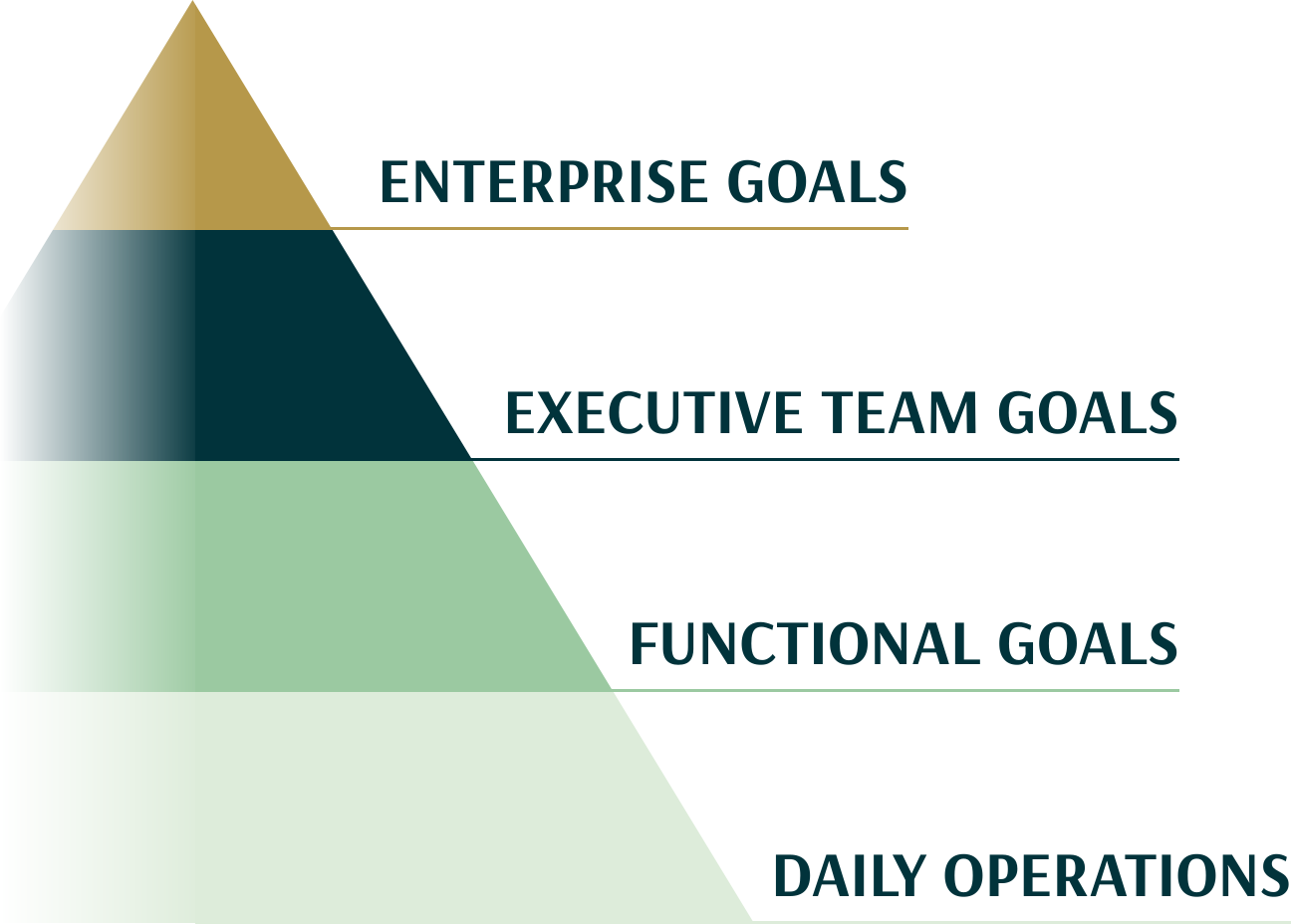
Layer 1: Enterprise Goals
Enterprise goals should be crisp, measurable, and clearly understood by the senior leadership team.
They should define what matters most for the business and create enough clarity that leaders can use them to guide trade-offs, investment, communication, and execution.

This Layer Should Answer:
- What are the most important outcomes for the enterprise?
- How will success be measured?
- What must remain true even as conditions change?
- Can leaders explain these goals in plain language?
Layer 2: Executive Team Goals
Executive team goals are the collaborative priorities owned by the senior team as a unit.
They are distinct from functional updates. These goals should focus on interdependencies, shared accountability, must-win outcomes, and the work only the executive team can move together.
This Layer Should Answer:
- What must this executive team deliver together?
- Which outcomes require cross-functional ownership?
- Where do we need shared accountability, not just CEO oversight?
- What trade-offs must be made at the enterprise level?
Layer 3: Functional Goals
Functional goals translate enterprise and executive priorities into department-level strategies.
They should be specific enough to guide teams, but clearly connected to the broader enterprise direction. The goal is alignment without sameness: each function has distinct work, but that work should not drift into siloed priorities.
This Layer Should Answer:
- How does this function support the enterprise goals?
- Where do functional priorities intersect with other teams?
- What must be coordinated across functions?
- What should this function stop, start, or shift to support the enterprise?
Layer 4: Daily Operations
The cascade is only real when it shows up in daily work.
Meeting agendas, leadership rhythms, decision forums, check-ins, dashboards, and communication should all connect back to enterprise priorities. Employees should be able to see how their work contributes to the broader direction.
This Layer Should Answer:
- Do our meetings reinforce enterprise priorities?
- Are daily decisions connected to strategic goals?
- Do employees understand how their work contributes?
- Are we revisiting goals often enough to keep them alive?

Executive Shift:
Strategy gains traction when it moves from aspiration to operating rhythm.
Use these questions to assess whether your organization is translating enterprise goals clearly across levels.
Check each statement that is consistently true.

Interpretation:
If you answered “no” to more than two questions, your cascade is likely breaking down somewhere between strategy and execution.
That breakdown may show up as:
- Employees unclear on what matters most
- Functions optimizing for their own priorities
- Executive meetings dominated by updates instead of enterprise work
- Leaders repeating strategy language without changing operating habits
- Goals that appear in planning documents but not in day-to-day decisions
Executive Shift:
The cascade fails when goals are communicated but not operationalized.
It is not enough to design cascading goals on paper.
Executives have to lead them into reality through communication, discipline, repetition, and modeling. The cascade becomes credible when leaders use enterprise goals to make decisions, set agendas, resolve trade-offs, and develop other leaders.
Below are five disciplines that help bring the cascade to life.
1. Lead With Narrative Clarity

Discipline:
Senior leaders must repeat the story of enterprise goals until it becomes common language across the organization.
That story should be clear enough to travel. It should help people understand not only what the goals are, but why they matter, what they require, and how the work connects.
Progress updates should explicitly link back to enterprise goals, not stand alone as disconnected wins or activity reports.
Prompts To Apply:
- When was the last time I tied a functional update directly to an enterprise goal?
- If I asked a frontline employee about our top goals, what would they say?
- What story, metaphor, or example would make these goals easier to remember?
- Where do I need to repeat the message with more discipline?
2. Build Financial Literacy Across The Organization
Discipline:
Enterprise goals often lose traction because employees and managers do not understand the financial levers behind them.
If leaders want stronger ownership, they need to help people understand how growth, margin, cost, productivity, risk, and investment connect to daily choices.
Financial literacy does not mean everyone needs to become a CFO. It means leaders at every level understand enough of the business model to make better decisions.
Prompts To Apply:
- What parts of our financial model should every leader be able to explain?
- Where are gaps in business acumen creating resistance or confusion?
- How can we integrate financial literacy into leadership development this year?
- What business context do managers need in order to translate goals more effectively?
3. Focus On Interdependencies, Not Just Functions
Discipline:
Executive teams should spend their most valuable time at the intersections of the business.
If the senior team spends most meetings on functional updates, the cascade weakens. True alignment happens when leaders work through shared priorities, dependencies, trade-offs, and decisions that cut across the organization.
Prompts To Apply:
- What enterprise goal requires genuine cross-functional collaboration to succeed?
- How can our executive agenda shift from reporting out to solving together?
- Which dependencies are not being named clearly enough?
- Who needs to be in the room to represent the full system?
4. Create Cadence And Rhythm
Discipline:
Cascading goals stick when they are reinforced rhythmically.
Without cadence, goals become background noise. Quarterly reviews, monthly check-ins, weekly team conversations, and leadership rituals should all help keep enterprise goals visible and actionable.
The rhythm does not need to be complicated. It needs to be consistent.
Prompts To Apply:
- Do our meeting agendas connect explicitly to enterprise goals?
- How often are we reviewing progress against the goals?
- What leadership ritual could keep enterprise priorities visible?
- Where has our communication rhythm become too reactive?
5. Develop Leaders Through Goal Setting
Discipline:
Cascading goals are not only an alignment tool. They are a leadership development tool.
When VPs, directors, and emerging leaders participate in translating enterprise goals into functional plans, they learn to think beyond their own areas of responsibility. They build enterprise thinking, strategic communication, and clearer accountability.
This is how goal setting becomes more than planning. It becomes preparation for larger leadership.
Prompts To Apply:
- Which leaders below the C-suite should be included in goal translation this year?
- What coaching would help them connect enterprise goals to functional plans?
- How can we hold leaders accountable for modeling alignment with their teams?
- Where could goal-setting conversations build stronger enterprise readiness?
Executive Shift:
The cascade is strongest when leaders are developed through the work of translating strategy.
Explore this related Bright Arrow resource:
Mastering Leadership Team Alignment: A Core Challenge for Leaders
A resource for senior teams working to strengthen alignment, shared accountability, and execution across the enterprise.
Setting enterprise goals is the easier part.
Living them is the leadership work.
At Bright Arrow, we help executive teams translate enterprise priorities into the operating habits required to sustain alignment. That includes clarifying collective goals, strengthening leadership team rhythms, improving strategic communication, and helping leaders connect the work of their teams to what matters most for the business.
We help leadership teams:
- Translate enterprise goals into executive team and functional priorities.
- Create operating rhythms that reinforce alignment daily.
- Strengthen the conversations that connect strategy to execution.
- Develop leaders by involving them in goal translation and accountability.
- Keep enterprise priorities visible in the flow of real work.
Executive Shift:
The strongest strategies are not only understood at the top. They are translated, reinforced, and lived at every level.