There's something magical that happens when we witness a leader truly transform. I've had the privilege of supporting many executives through significant career transitions, and one particular journey stands out as a powerful reminder of what's possible when we invest in leadership development.
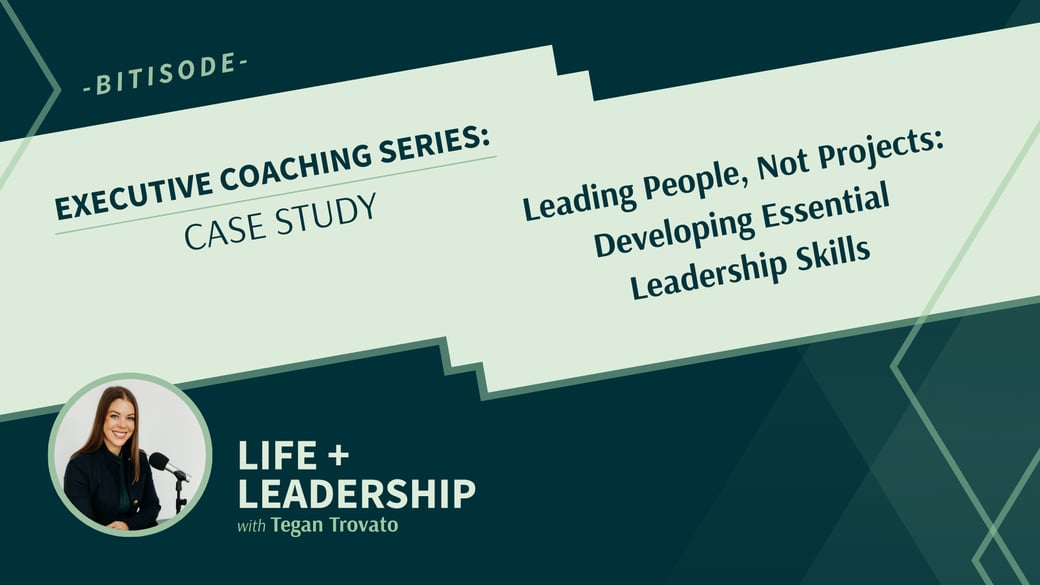
In this episode of the Life + Leadership podcast, I share the story of a client who navigated two significant leadership transitions with the support of executive coaching. This case illuminates how intentional development can transform both an individual's leadership capacity and an organization's performance.
The Journey Begins: From Technical Expertise to People Leadership
When I first met this client, they were stepping into unfamiliar territory - moving from a technical role to a leadership position requiring people management skills they hadn't yet developed. This transition is one of the most challenging shifts many professionals face, as the skills that made them successful as individual contributors don't always translate to leadership effectiveness.
What struck me was their openness to growth despite the discomfort. They recognized that leadership isn't just about having the right answers (which they were accustomed to providing), but about creating the conditions for others to thrive.
Our initial coaching work focused on building a foundation of leadership essentials:
- Learning to delegate effectively
- Creating meaningful development plans for team members
- Cultivating a leadership mindset
- Softening their approach to become more approachable
This leader's willingness to examine their impact on others and adjust their communication style proved transformative. Rather than simply directing their team based on technical expertise, they began creating space for others to contribute and develop.
When Success Creates New Challenges
Leadership development is rarely linear, and this case proved no exception. The organization experienced significant growth, acquired a new company, and the leader was tapped for a new role that recognized their success but also introduced a new level of complexity.
I've witnessed this moment of both triumph and trepidation many times. The very success that earns a promotion can create the conditions for potential struggle, as new roles demand different skills and perspectives.
Our coaching shifted to address these enterprise-level challenges:
- Defining the parameters of a newly created position
- Developing strategic thinking beyond functional expertise
- Navigating senior leadership dynamics and communication
- Cultivating curiosity when faced with ambiguity
- Building resilience during periods of intense stress
What moved me most was watching this leader embrace vulnerability during this transition. They acknowledged the uncertainty of the new role while maintaining the confidence to lead through complexity.
The Human Impact of Leadership Growth
Numbers and metrics tell part of the story - the acquired company was successfully integrated, new products were strategically introduced, and operations aligned with strategic goals.
But the human impact runs deeper. Individual contributors were developed into functional supervisors, creating a ripple effect of leadership development throughout the organization. This transformation reflects one of my core beliefs: true leadership isn't just about personal achievement but about creating more leaders.
Perhaps most striking was the evolution in this leader's approach. The once-technical expert became known for approachability and for identifying leadership potential in others. They had crossed that critical threshold where leadership becomes less about technical solutions and more about human connection.
By assuming responsibility for internal operations, this leader created space for others to focus externally during a critical period - embodying the essence of collaborative leadership that elevates an entire organization.
Reflections on Leadership Development
This journey reminds me of several truths I've observed throughout my work with executives:
- Growth happens at the edge of comfort. The most significant leadership development occurs when we step into roles that stretch us beyond our existing capabilities. This discomfort, when supported appropriately, becomes the catalyst for transformation.
- Leadership evolves from doing to being. Early in our careers, we're valued for what we do. As we advance, our impact comes increasingly from who we are and how we show up for others. This shift requires intentional development.
- Coaching creates a container for transformation. Having a dedicated space to reflect, experiment, and integrate new approaches accelerates growth during critical transitions. Leadership development doesn't happen automatically - it requires deliberate attention.
- Organizational investment in leadership yields compound returns. By supporting this leader through multiple transitions, the organization gained not only a more effective leader but also a stronger leadership culture that permeated throughout the company.
When I reflect on this case, I'm reminded that leadership development isn't just about acquiring new skills - it's about expanding one's capacity to navigate complexity while bringing others along. It's about transforming from a problem-solver to a culture-builder.
What leadership transitions are you or your organization navigating right now? How might dedicated development support help you transform those challenges into opportunities for growth?
Tegan Trovato is the founder of Bright Arrow Coaching, partnering with executives and organizations to navigate leadership transitions and build sustainable leadership capacity.